Six new zero-days in the fridge controllers hit in Europe's supermarket attacks. Germany's BSI: patching is not enough
Dutch firm Midnight Blue says it found six pre-authentication remote code execution flaws in the Danfoss AK-SM 800A, firmware 5.3.2, in under an hour of manual review. Belgium's CCB confirmed the findings and Germany's BSI issued an orange-level warning on 13 November.
“We recommend against allocating scarce security resources to patching efforts and instead focus on reducing exposure.”Midnight Blue, 11 November 2026
Six flaws in under an hour
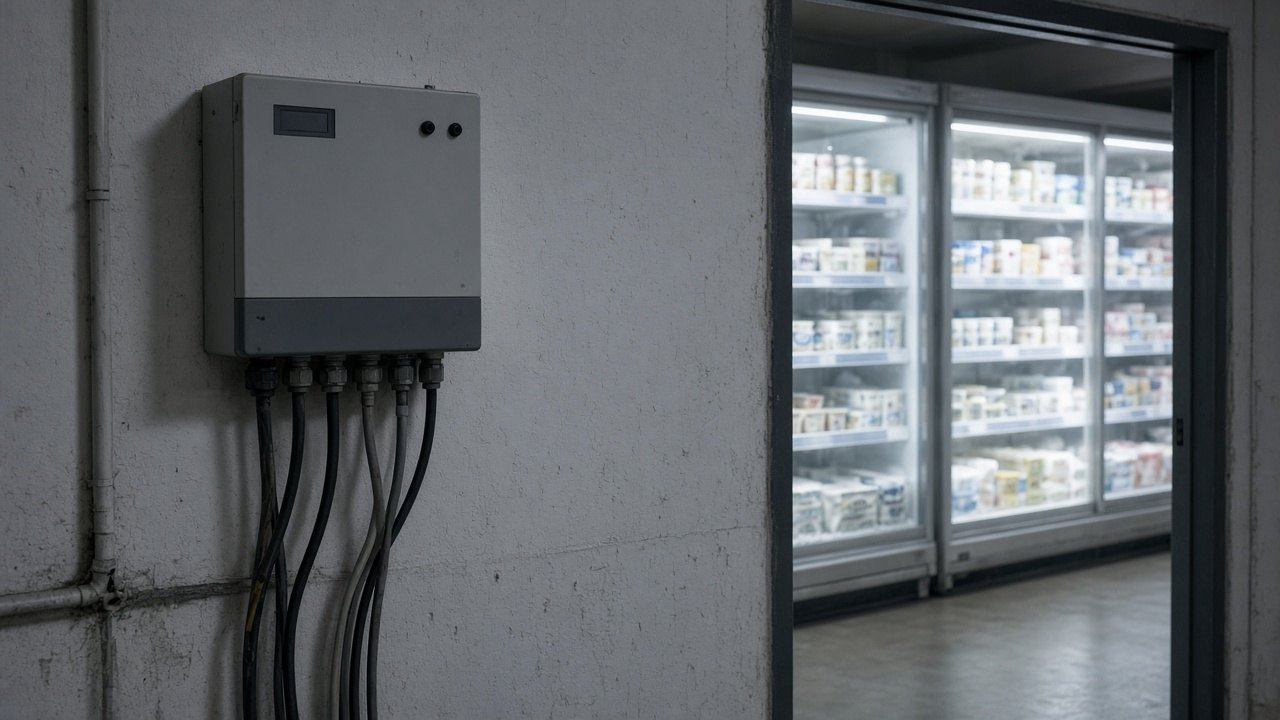
On 11 November, Midnight Blue researcher Carlo Meijer published findings on the Danfoss AK-SM 800A, the refrigeration controller already involved in attacks on supermarket cooling in several countries. In the latest firmware, 5.3.2, he says he found six pre-authentication remote code execution zero-days in less than an hour of manual work, with no AI.
The Centre for Cybersecurity Belgium confirmed the findings in an advisory on 12 November. On 13 November Germany's BSI issued a security notice rated 3 of 4, orange: measures must be taken immediately, massive disruption of normal operation is possible.
Why the researchers say patching will not close it
Midnight Blue places the work against the attack waves that began in France on 11 October and returned on 2 November, with forced defrosting, tens of millions of euros of spoiled food and, in some cases, fires. Earlier flaws in this product line were already public, including the code-of-the-day authentication bypass CVE-2025-41450, the OS command injections CVE-2023-25915 and CVE-2025-41451, and the path traversal CVE-2023-25914.
Many owners change default passwords, apply patches and move on, the researchers write. They call that insufficient and say remote access should go through a VPN, a private APN or very strict IP allow-lists. Citing Censys, they say hundreds of Danfoss systems are still exposed online, along with more than 1,000 Copeland and Dixell controllers.
Inside the firmware
Midnight Blue is withholding exploit details while disclosure with Danfoss runs, but it described the code base. The firmware can be downloaded from the vendor's site. The controller runs Danux, a custom Yocto-based Linux, on an i.MX6 processor, with an NGINX reverse proxy in front of CGI handlers.
Requests ending in .cgi go to sm_app, one large program that the researchers compare to a mini real-time operating system. It has 52 tasks, including a Modbus driver, Ethernet, I/O handling and the web server. They counted hundreds of strcpy calls in handlers reachable without logging in, and in earlier firmware each command handler enforced authentication on its own instead of centrally.
A checksec run on sm_app showed no stack canary, no PIE and only partial RELRO. NX was enabled. The researchers also say the device has no secure boot. The BSI warns that an attacker with code execution could load malicious firmware, leaving the devices unusable and requiring manual recovery or replacement, and that an outage would likely last long if many devices were hit at once.
What the BSI tells operators
Check whether the controllers can be reached from the internet. If they can, take them offline, and if a permanent link to other sites is needed, protect it with a VPN. Check firmware levels and install updates where available.
On any suspicion of compromise, change all credentials and check that the equipment connected to the controllers works properly. The BSI adds that new patches are no guarantee that more flaws will not appear soon in the same product.
If a cold room can only be serviced remotely through an open web port, who in the organization signed off on that risk?
ICS Cyber News by email
Flashes and digests for the topics you pick. No ads.
Edited by Adam Zinger with AI assistance